
Turning Plastic Waste into Renewable Energy: A New Approach to Resource Recovery
As industries continue searching for sustainable alternatives to traditional waste disposal, innovative waste-to-energy technologies are creating new opportunities to recover value from materials that would otherwise end up in landfills.
One emerging approach involves converting plastic products back into oil through advanced recycling processes. While a significant portion of the material is removed as residual waste during processing, a valuable secondary product is generated in the form of methane-rich gas which can be captured, dried, and refined into a usable fuel source.
The gas treatment process shares similarities with biogas upgrading systems commonly used in agricultural and wastewater applications.
However, instead of organic feedstocks producing the gas, the source material is plastic waste streams that have undergone specialized recycling and recovery processes. By applying gas drying and purification technologies, operators can transform these by-products into a cleaner, more usable energy resource.
This type of innovation highlights the growing role of circular economy principles in modern manufacturing and waste management. By recovering both liquid and gaseous products from difficult-to-recycle materials, companies can reduce reliance on landfills while creating alternative fuel sources from existing waste streams.
As waste-to-energy technologies continue to evolve, projects like these demonstrate how advanced recycling can move beyond simple material recovery and contribute to broader sustainability goals. Converting waste plastics into usable fuels not only extends the value of discarded materials but also offers a pathway toward more efficient resource utilization and reduced environmental impact.
How Does Van Air Systems Fit In?
One customer came to us using a booster pak, which for those who don't know, is like a complete biogas compression station. A turbo compressor is a type of compressor technology that can be installed inside a compression station.
Some examples of Booster Paks include:
- A farm digester producing biogas at 2–5 psi may use a biogas booster package containing a rotary screw or reciprocating compressor to raise pressure for an RNG upgrader or pipeline injection.
- A large gas-processing plant handling very high flow rates might use a turbo (centrifugal) compressor because of its efficiency at large volumes.
This customer came to use using our GF200 Series Natural gas Filters to remove particulates. For them it is a cheaper option because booster paks can take on a lot of moisture.
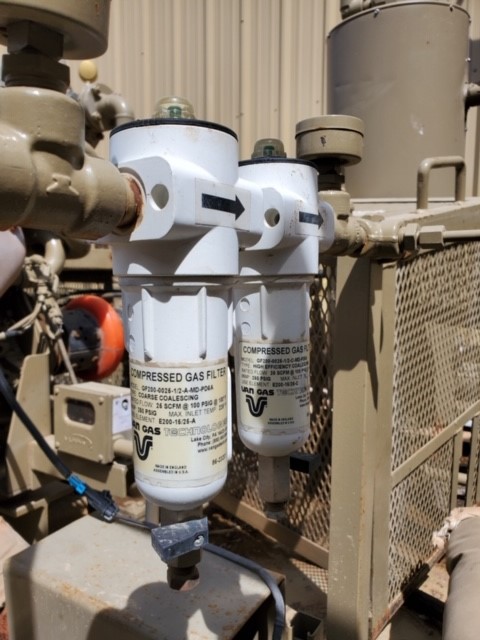
Currently their flow and pressure were very small so they did not need a natural gas dryer at the time. However when the time comes to upgrade the site to a higher flow and pressure, with the purchase of a turbo compressor, it will create a lot of moisture.
This would be a perfect time to utilize our Natural Gas PLD skid package.
Supporting Renewable Energy Production with Van Air Systems Natural Gas Dryers
As new technologies continue to transform plastic waste into valuable renewable energy resources, effective gas treatment still remains a critical part of the process.
Van Air Systems PLD Natural Gas Dryers provide a simple, reliable solution for removing moisture from methane and other process gases generated during plastic-to-energy applications.
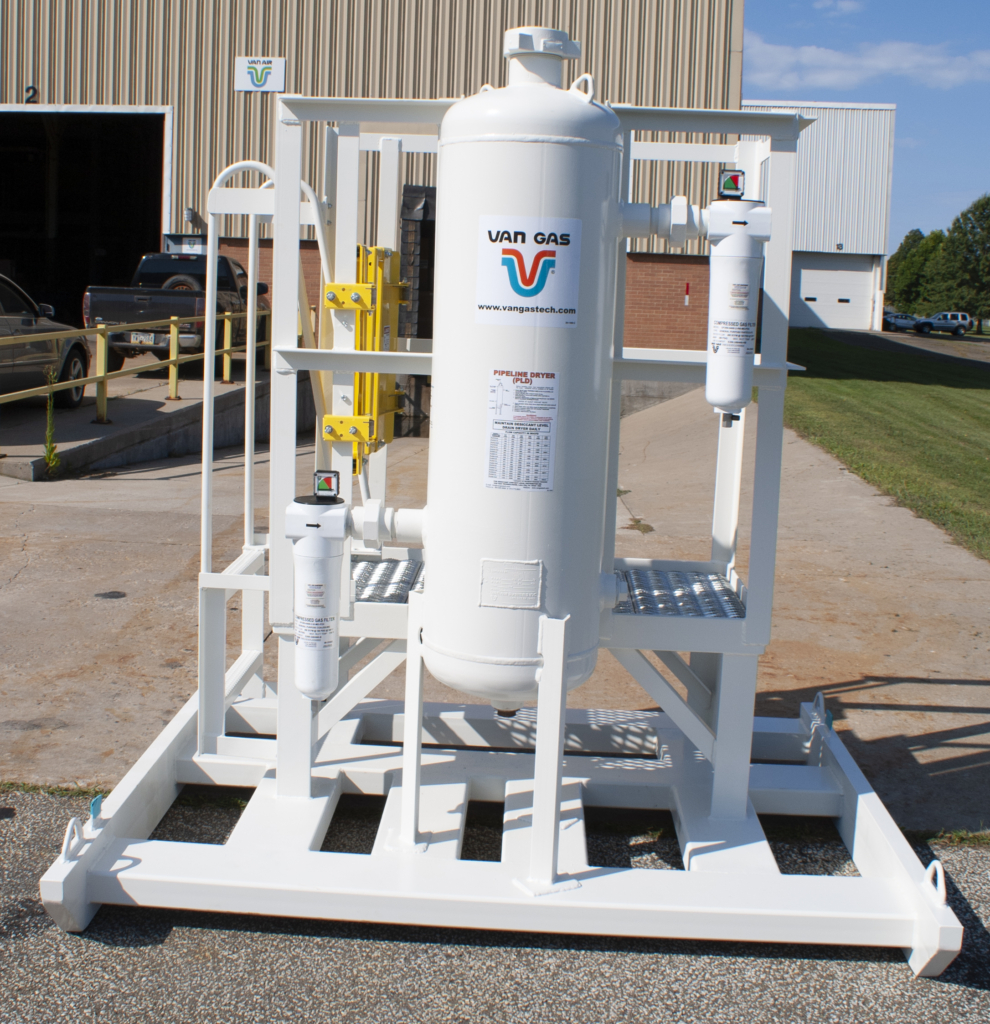
Van Air Systems PLD Dryers, have unique environmentally friendly deliquescent desiccant technology, require no electricity, and eliminate purge gas losses commonly associated with regenerative drying systems.
These features combined with GF200 coalescing pre-filtration and particulate post-filtration, will help deliver dry, clean gas while maximizing product recovery and operational efficiency.
As the industry continues to explore new approaches to resource recovery, dependable gas drying solutions can play an important role in supporting sustainable energy production and Van Air Systems has solutions to help.