
Applications Search Results for: “”
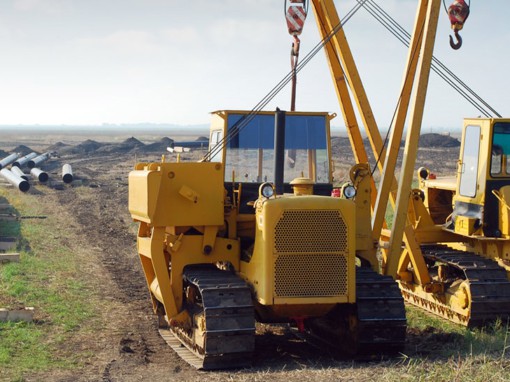
Rental Air Compressors for Pipeline Dew Point Drying
When a new pipeline is constructed it needs to be hydrostatically pressured tested – hydro testing for short – to ensure there are no leaks in weld seams. This involves pressurizing a segment of the new pipeline with water. After successful hydro testing, the pipeline needs to be “de-watered”. This…
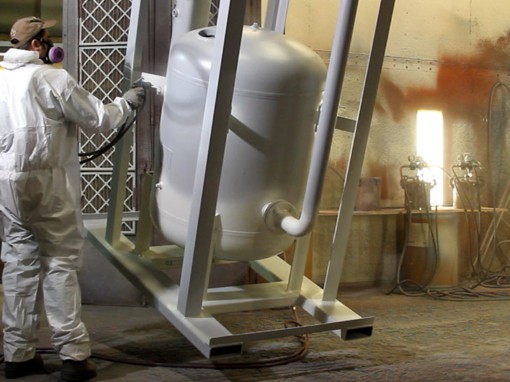
Portable Air Dryers for Abrasive Blasting & Painting
Commercial blasting and painting contractors need the right equipment to complete job on-time, on budget. Sometimes it makes financial sense for the contractor to purchase the equipment needed for a job, and other times it makes more sense to rent the equipment. The Blast Pak from Van Air Systems is…
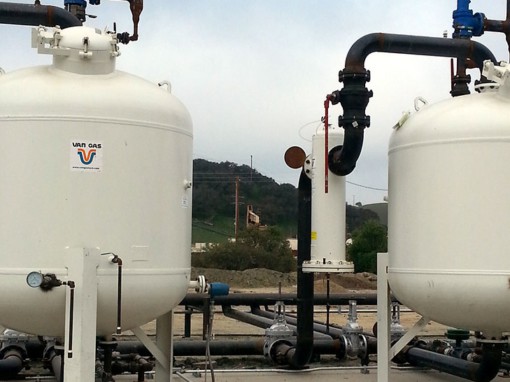
Pipeline Deliquescents & Desiccants for Fuel Gas Conditioning
Oil and natural gas drillers, producers, and processors often rely on raw untreated natural gas to generate heat, steam, and power at remote operating sites. This fuel gas can contain a variety of impurities, including liquid water, water vapor, liquid hydrocarbons, compressor lubricants, glycol, paraffin, solid particulates, and aerosol mists….
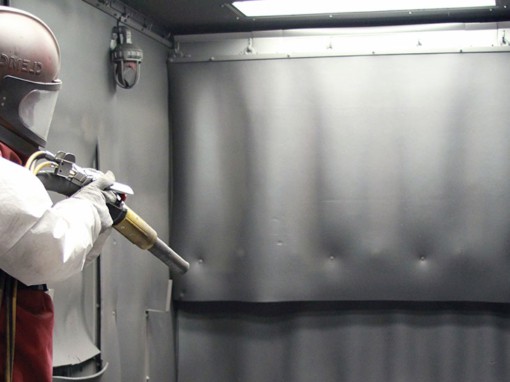
Compressed Air Dryers For Blast Pots & Nozzles
Moisture in compressed air negatively affects both the productivity and workmanship of abrasive blasting contractors. The harmful effects of wet air include the clumping or clogging of abrasive grit, inconsistent and/or excessive flow of abrasive, corrosion of ferrous abrasives, and damage to blast machine valves and controls. When abrasive media…
Coalescing & Particulate Filters for Fuel Gas Coalescing
Sometimes a fuel gas combustion device such as a small boiler, catalytic heater, or burner does not require dehydrated gas. Fuel gas free of liquids and mists is good enough. For these small fuel gas applications, Van Air Systems offer F200 series filters for basic fuel gas coalescing. These inline…
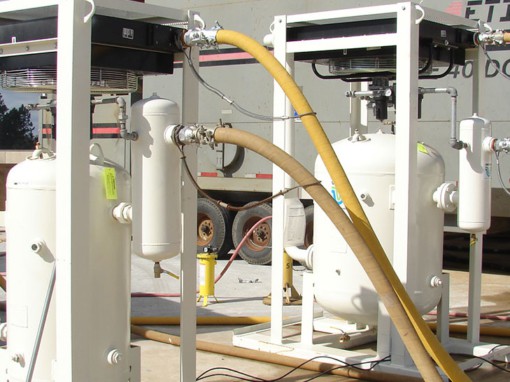
Stationary Compressed Air Dryers For Mobile & Stationary Paint Booths
Water in compressed air lines causes paint and coatings to drip, bubble, and “fish-eye”. Wet compressed air may also dilute the paint, both increasing the cure time and affecting the adhesion of the coating to the steel surface. Properly cooling, drying, and filtering compressed air eliminates re-work and increases the…
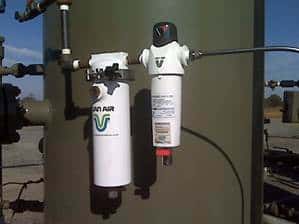
In-line Desiccant Dryers for Instrument Gas Drying & Filtration
Oil and gas companies use pressurized natural gas (i.e. instrument gas) to operate pneumatic actuators and controllers. These controllers are essential for managing process flows at wellheads, compressor stations, and processing plants. Pneumatic actuators controllers direct the opening and closing of valves, the level of fluids in tanks and separators,…

All-In-One Compressed Air Treatments For Flash Rust Prevention
Abrasive blasting exposes a steel substrate to atmospheric humidity, and blasting contractors must contend with “flash rusting”. Flash rusting is surface corrosion that appears on steel when it’s not coated quickly enough. The presence of liquid water in compressed air exacerbates a contractor’s problems with flash rusting. Liquid water in…
Heatless Regenerative/Pressure Swing Dryers for Hazardous Area Compressed Air Drying
Compressed air is widely used in the oil and natural gas industry to drive pneumatic pumps, operate drill rig controls, and to drive actuators and controllers at production sites. Often operating spaces at these sites have a hazardous area electrical classification, due to the presence of combustible vapor. Such classification…
Deliquescent Compressed Air Dryers for Blast Cabinets & Booths
Abrasive blast cabinets and booths are used to clean metal parts in a variety of industrial settings. Compressed air propels an abrasive media against the metal part, removing old paint, corrosion, scale, and other build up. Certain abrasives types are highly sensitive to moisture in the compressed air, especially steel…